Beyond the Checklist: What Should a Film Critics’ Jury Reward?
What might cinema allow us to experience that we had not known how to articulate before. Article by: Tornike Tabatadze

This year, the Kutaisi International Short Film Festival introduced a new award decided by a jury of young film critics. I was one of five critics entrusted with selecting the winning film. Over five days, we watched five competition films each, bringing the total to twenty-five. As the festival progressed, our responses began to change. By the fifth evening, we had developed our own favourites, and our discussions had become considerably more invested. Eventually, we shortlisted three films: Christian Avilés’s Stallion and a Crystal Ball, Guil Sela’s No Skate!, and Guillermo de Oliveira’s Butt-Face. What followed was a three-hour deliberation that forced us to confront a question more fundamental than which film was the best: what, precisely, should a jury of film critics reward?
We had the opportunity to approach the competition from a different perspective.
As a film critic, I found it important to temporarily set aside the industrial and commercial dimensions of cinema and concentrate instead on its artistic possibilities: the emotional, intellectual, and personal connections a film can establish with its audience. I wanted to trust my instincts and develop a critical argument around my response to a film, rather than allow an abstract set of criteria to determine its value in advance. This does not mean that commercial considerations are irrelevant to film criticism or festival programming. Cinema has existed as both an art form and an industry since its emergence, and dismissing its industrial dimension altogether would be an inadequate way of understanding the medium. Our particular responsibility, however, was different. We were not selecting the festival’s principal prize, nor were we tasked with assessing a film’s commercial potential. As a jury of young critics, we had the opportunity to approach the competition from a different perspective, one that placed artistic ambition and the possibility of an aesthetic or emotional encounter at its centre.
Guil Sela’s No Skate! and Guillermo de Oliveira’s Butt-Face were among the strongest contenders. Both had earned the enthusiastic support of our jury and the audience in the screening room. Their accomplishments were immediately recognisable: effective cinematography, well-constructed screenplays, convincing performances, and a strong sense of humour. When we began deliberating, our first instinct was to assess the films through a system of checkmarks, identifying the elements each handled particularly well. By this measure, both films performed exceptionally. One of my fellow jurors made an argument that stayed with me: these were films one could easily revisit, share with friends, and enjoy collectively. Their humour could be discussed long after leaving the screening room, extending the pleasure of the cinematic experience beyond the screening itself.
The ability of a film is to entertain, connect people, and generate a shared response.
There is considerable truth to this argument. Cinema is a social experience, and the ability of a film to entertain, connect people, and generate a shared response should not be underestimated. Yet we eventually decided to approach the question from another direction. Rather than asking which film performed most successfully across a familiar set of criteria, we began to consider what might distinguish a technically accomplished and enjoyable work from one that leaves a more lasting impression.
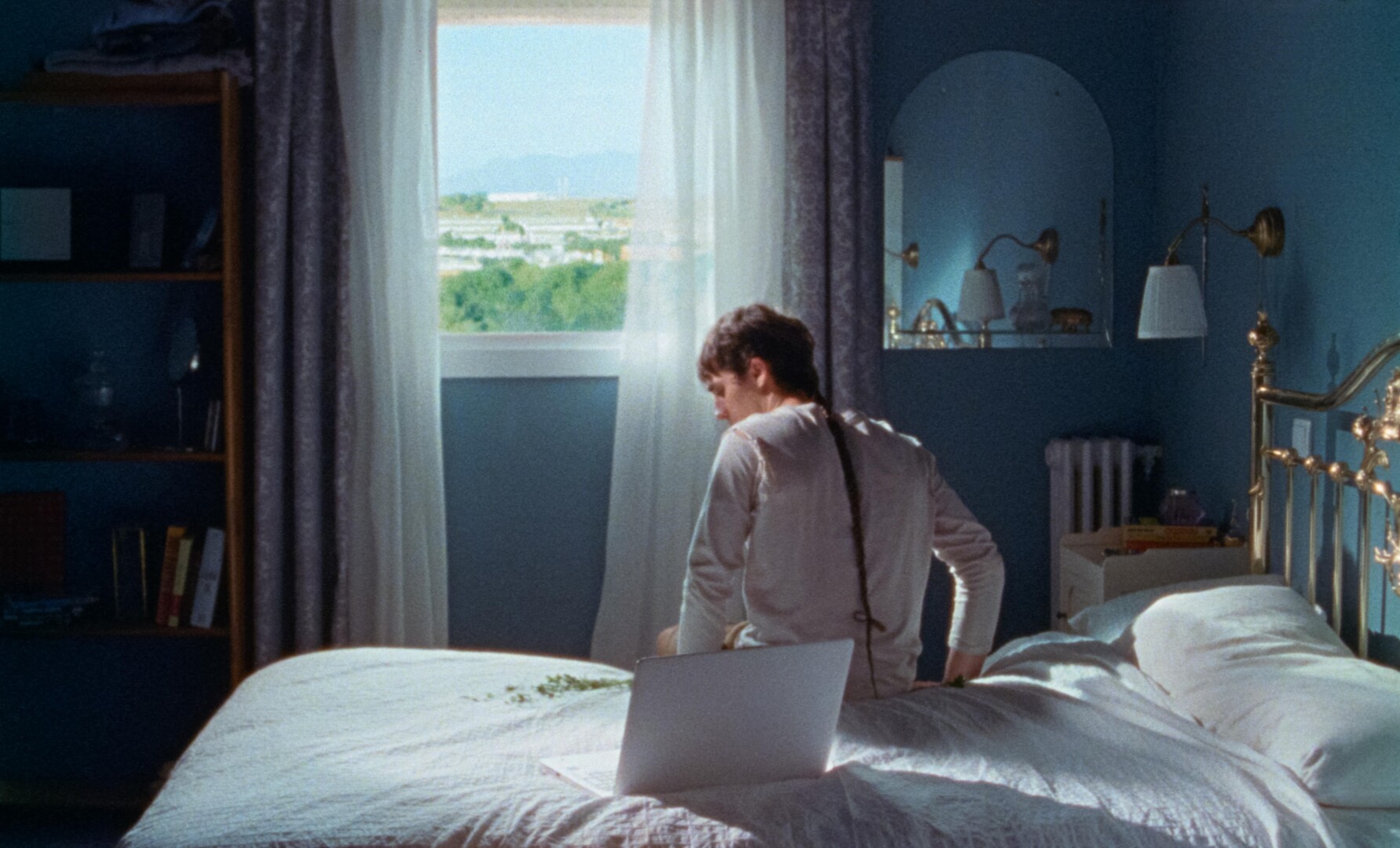
Christian Avilés’s Stallion and a Crystal Ball presented a different kind of challenge. It was not necessarily the sort of film one would immediately want to rewatch after a first viewing, nor was it an obvious choice for an uncomplicated evening of entertainment. Its imagery and associations demanded a different kind of attention. My notes from the screening read less like a conventional assessment than a series of fragments: witchcraft, male desire, castle-prince-dragon, death, gas, semen, blue vape, a mother, a carousel, modernity, the Middle Ages, folklore, and 16mm film. Among these fragments was the Spanish phrase soy del deseo - “I belong to desire.” Taken together, these impressions suggest a cinematic world in which the folkloric and the contemporary, the grotesque and the intimate, coexist without necessarily resolving into a single, stable meaning.
What remained with me was not simply the accumulation of unusual images, but the film’s visual language and its capacity to bring disparate registers into contact. Medieval iconography and folklore seemed to occupy the same imaginative space as contemporary objects and bodily experiences. Desire appeared not as an abstract theme to be explained through dialogue, but as something that could emerge through images, textures, colours, and associations. The contrast between the archaic and the modern became particularly intriguing: rather than presenting modernity as the definitive break from an earlier world, the film seemed to allow older symbolic structures to persist within contemporary experience. Its visual vocabulary invited interpretation without necessarily offering the reassurance of a single, definitive reading.
Would choosing it make us appear pretentious, elitist, or unnecessarily attached to niche cinema?
As we discussed the film, an uncomfortable question emerged: would choosing it make us appear pretentious, elitist, or unnecessarily attached to niche cinema? Film critics are often accused of confusing obscurity with artistic depth, elevating difficult works simply because they resist conventional forms of appreciation. None of us wanted our decision to reinforce this stereotype. Nor did we want to reward a film merely because it was unconventional. Difficulty, ambiguity, and formal experimentation are not, in themselves, evidence of artistic achievement.
What should cinema mean to a film critic?
But our three-hour discussion gradually led us away from the question of how our choice might be perceived and towards a more fundamental one: what should cinema mean to a film critic? Should we reward a film because it satisfies the expectations of cinematic craftsmanship, delivers an enjoyable experience, and succeeds in bringing an audience together? Or should we also consider the less easily measurable qualities of cinema: its capacity to unsettle, to linger in the mind, to awaken an emotion that had remained dormant, or to give form to something we had felt but could not previously articulate?
These possibilities are not mutually exclusive. A film can be technically accomplished, entertaining, emotionally resonant, and artistically ambitious at once. Nor should an immediate, pleasurable response be regarded as less valuable than a prolonged intellectual engagement. The distinction we were attempting to articulate was not between popular and niche cinema, or between accessible and difficult films. It was between evaluating a film according to a predetermined set of criteria and remaining attentive to the particular experience that a film makes possible. The former can help establish a shared basis for discussion; the latter requires us to acknowledge that cinema's effects cannot always be anticipated or measured in advance.
After three hours of discussion, we chose Stallion and a Crystal Ball as the winner.
The decision did not mean that we considered Avilés’s film superior in every conventional respect, nor that the other shortlisted films were somehow less deserving of recognition. Rather, it reflected our conviction that the film offered something we did not want to reduce to a checklist. Its images continued to provoke questions after the screening had ended. Its visual language made connections that were not immediately apparent, leaving room for uncertainty, interpretation, and personal response. In this sense, the film’s value lay not only in what it presented on screen, but also in what it set in motion within its viewers.
Serving on the jury reminded me that criticism involves more than identifying strengths and weaknesses or determining whether a film fulfils the expectations established by its form. It also requires us to articulate why a particular cinematic experience matters, even when that significance is difficult to communicate through conventional evaluative language. The critic’s task is not to defend obscurity for its own sake, nor to dismiss the pleasures of accessible cinema, but to remain open to different ways in which films can produce meaning.
What remains after it has ended.
Perhaps, then, the most important question a critic can ask is not simply whether a film works, but what remains after it has ended. What images return unexpectedly? What associations continue to develop? What feelings become newly recognisable? And what might cinema allow us to experience that we had not known how to articulate before.
Article by: Tornike Tabatadze