BUNKER: The walls we build around ourselves
Florian Zeller turns an ordinary relationship in crisis into a subtle reflection of our time, where fear, ambition and the pursuit of security can become the very things that divide us.

When the story becomes bigger than its stars
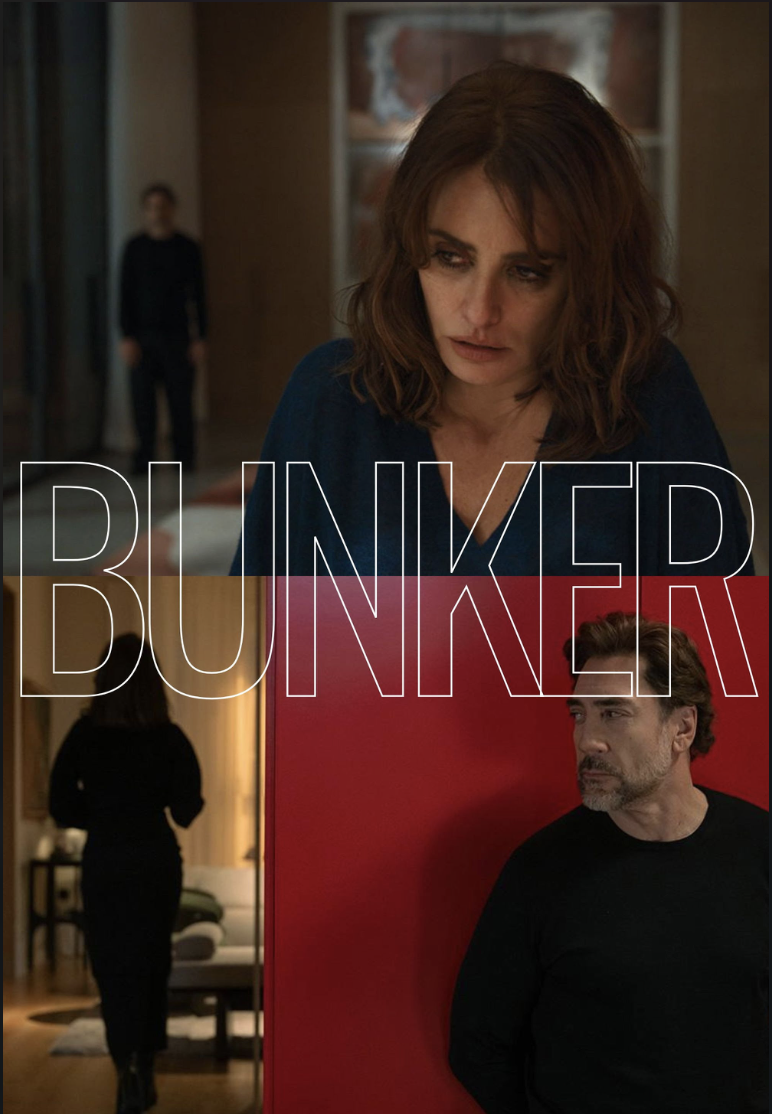
The film opens with a beautiful close-up of Penélope Cruz. Knowing that she and Javier Bardem are the leading actors, one might initially expect a star-driven film, built around the presence and charisma of two internationally recognised performers. But quite quickly, the stars step aside and something much more interesting takes over: the story of a relationship slowly losing its connection.
This is precisely what I appreciated about Bunker. It takes situations that are familiar to almost everyone and allows us to recognise ourselves in them. You begin watching Miguel and Sofia, but before long you find yourself thinking about your own relationships. How long do they last? What makes two people grow apart? And at what point do we stop sharing the same vision of the future?
There is something particularly recognisable about the circumstances surrounding this couple. Miguel is an architect who has moved from one city to another in pursuit of his professional ambitions. I found myself connecting with the experience of leaving behind a familiar environment, a professional position and a community in which you once had your place. You start again somewhere else, adapt, build a new life and, for a while, everything seems to work. Until something happens.
The neighbour, the missing cat and everything that seams off
One of the film's most interesting narrative devices is the neighbour who begins constructing a window overlooking the couple's home. An apparently simple architectural intervention becomes an invasion of privacy and a source of growing discomfort.
For a Croatian audience, this situation might feel particularly familiar. We know very well that a neighbour can sometimes become your biggest enemy, especially when it comes to property boundaries, privacy and the question of who has the right to do what.
Then add a missing cat, a marriage that has lost its initial spark, a professional opportunity that slips away and a growing sense of frustration. Suddenly, the neighbour becomes an easy target for all the dissatisfaction that has been accumulating beneath the surface.
Sometimes we look for someone to blame because it is much easier than confronting what is actually going wrong in our own lives.
Florian Zeller, who also wrote and directed the film, builds this tension through seemingly ordinary circumstances. The problems are not extraordinary, but the way they accumulate reveals just how fragile our sense of security can be.
A luxurious bunker in a world falling apart
The bunker itself operates on several levels. Miguel receives an offer from a technology billionaire to design a sophisticated survival shelter. It is potentially the biggest professional opportunity of his career, but it comes with an uncomfortable moral dilemma.
Sofia's reaction raises one of the film's most important questions: when people are dying and there is a war outside, why should the priority be building a stylish, luxurious bunker for someone wealthy enough to buy his own survival?
Shouldn't that money be used to help as many people as possible? To do something meaningful now, rather than design an escape from a world that is falling apart?
The bunker becomes a symbol of privilege: the possibility of buying protection instead of taking responsibility for the world we share.
Miguel finds himself caught between professional ambition and personal morality. But while he becomes increasingly consumed by the project, he seems to forget something much closer to home: his wife's own professional life and the sacrifices she has made.
Sofia is trying to build a career in a country where she does not speak the language as her native language. As an editor of fiction books, her professional opportunities and sense of independence are closely connected to that reality. Her frustrations are not necessarily less important than Miguel's, but they are increasingly overlooked.
And this brings us to what I believe is the real subject of the film: the consequences of forgetting to communicate.
When we stop speaking, sharing and listening, the distance between two people grows. We become closed, defensive and afraid. And sometimes, by the time we realise what has happened, we have already built a wall that neither knows how to cross.
A film that remembers the pleasure of cinema
I particularly enjoyed the visual language of Bunker. Cinematographer Ben Smithard creates beautiful compositions that complement Miguel's profession as an architect. The spaces, framing and visual balance are not simply decorative; they contribute to the character's world and the atmosphere of the film.
The red kitchen cabinets, appearing repeatedly in the background, are another striking visual element. The production design by Alain Bainée makes an important contribution here, creating an environment that feels carefully considered and carries its own visual identity. Costume designer Sonia Grande and the other creative departments also help establish this world.
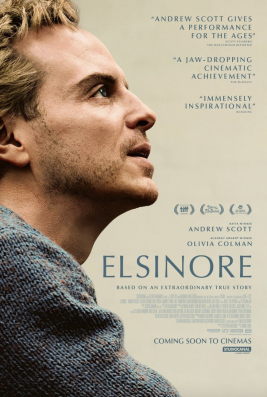
Unlike Elsinore, where the technical departments seemed almost invisible in their service to the story, Bunker allows its visual design to make a statement. And rightly so. Architecture, space and design are part of the film's central language.
Yorgos Lamprinos' editing and Volker Bertelmann's original score further support the film's rhythm and atmosphere, allowing the tension to develop without losing the intimacy of the story.
And then comes the liberation. A moment of catharsis that I won't reveal, but one that gives the film a satisfying emotional release.
We need more films like this
What I missed, and what I particularly enjoyed rediscovering in Bunker, is the pleasure of watching a simple story told exceptionally well.
A film does not always need extraordinary circumstances, elaborate visual effects or an overwhelming cinematic concept to make an impact. Sometimes it needs good characters, recognisable situations, strong performances and a director who knows exactly what story he wants to tell.
Javier Bardem and Penélope Cruz are not simply two stars performing opposite each other. They become Miguel and Sofia, two people whose relationship we can recognise, question and perhaps even understand. Stephen Graham (Toby - the neighbour) adds another dimension to the film's world, while the entire creative team contributes to an accomplished and cohesive cinematic experience.
There is art here, human connection, contrast, tension and, importantly, an ending that leaves you with a sense of emotional completion.
I also appreciated that I never found myself wondering whether I was supposed to understand something that was deliberately made obscure or whether I was simply missing the point. I could engage with the characters, follow their dilemmas and enjoy the film without needing to solve a cinematic puzzle.
Sometimes it is enough to leave the cinema thinking: that was a good film. Or, even better, that was a good European film.
Bunker is a reminder that we still need stories about ordinary people, ordinary relationships with extraordinary questions. Because the world outside might be becoming increasingly uncertain, but perhaps the most important thing we can do is make sure we don't lose the people inside our own homes.